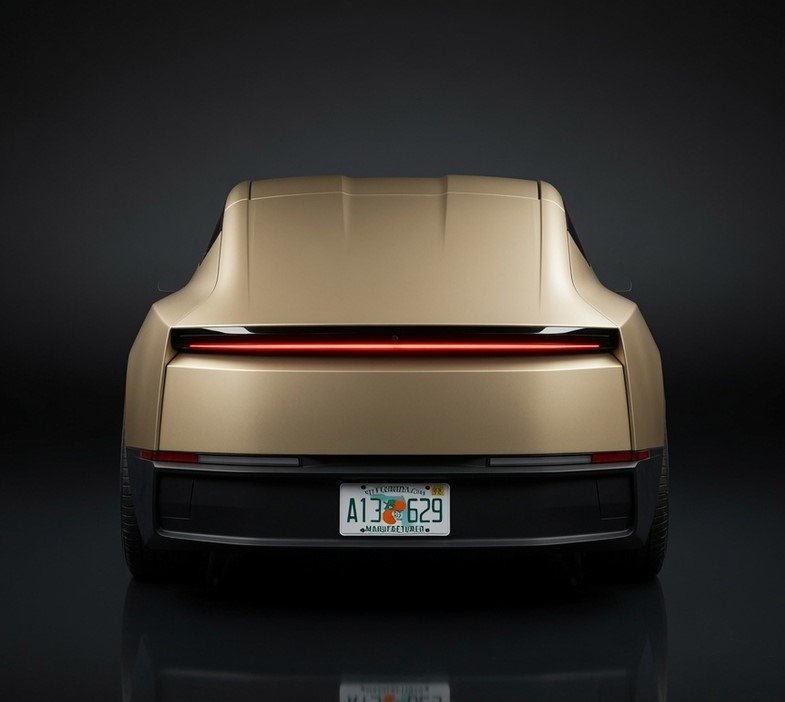
165 watt-hours per mile.
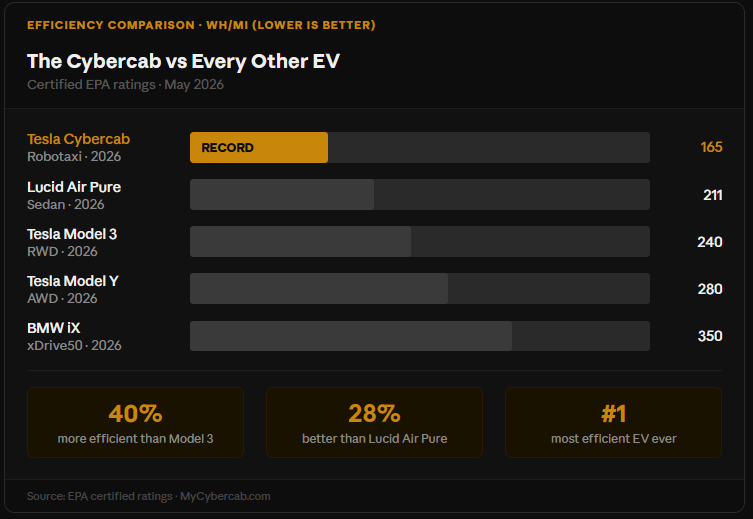
That number dropped last week and the EV world hasn't fully processed it yet. The Tesla Cybercab is now the most energy-efficient production electric vehicle ever certified not by a little, either. By a lot.
The Most Efficient EV Ever By a Wide Margin
The certification came from Tesla VP of Vehicle Engineering Lars Moravy at the Model S and Model X farewell event at Fremont factory. This isn't a marketing claim or an internal target. It's an official certified rating. The next closest EV — the Lucid Air Pure — consumes 28% more energy per mile. Every other car on the road isn't even in the conversation. To put it in perspective: the Cybercab is 40% more efficient than a Model 3. The Model 3 is already one of the most efficient cars you can buy. The gap here is genuinely hard to overstate.
So What Does 165 Wh/mi Mean For Your Ride?
Here's where it gets interesting for anyone tracking Cybercab fares on our live price tracker. At 165 Wh/mi, the electricity cost to move a Cybercab one mile works out to roughly 2.6 cents. That's it. A gas car at 30 mpg burns through about 11–12 cents per mile in fuel alone — before oil changes, brake jobs, or a driver's paycheck. An Uber in Austin typically runs $1.80–$2.20 per mile all-in. The Cybercab's energy cost is so low it basically disappears from the equation. The real cost of your ride becomes fleet operations, software, and Tesla's margin. Not fuel.
How Did They Pull This Off?
Tesla got to 165 Wh/mi by doing something most automakers won't do — they removed everything that wasn't necessary. No steering wheel. No pedals. No driver seat. No traditional mirrors. A purpose-built aerodynamic two-seat body. A sub-50 kWh battery pack that keeps the whole thing light. The result is a vehicle designed from the ground up to do one thing: move two people from A to B as efficiently as physically possible. Eric E., Tesla's Cybercab Engineering Lead, made clear they're not done either — "We have been and will continue to be relentless on efficiency."
The Asterisk You Should Know About
Let's keep it real. The efficiency record comes with a catch. You're comparing a tiny, stripped-down, two-seat robotaxi with no traditional controls to full-size passenger vehicles. It's not a fair fight and Tesla knows it. Comparing the Cybercab's 165 Wh/mi to a Model Y is like comparing a bicycle to an SUV on fuel economy. That said it doesn't matter. The Cybercab isn't trying to be a family hauler. It's a commercial fleet vehicle built to run continuously, cheap, and autonomously. For that job, 165 Wh/mi is a legitimate engineering breakthrough.
What It Means for Cities We're Tracking
Lower operating costs mean one thing for riders: downward pressure on fares. If Tesla is spending 2.6 cents per mile on electricity, there's a real argument that Cybercab rides could eventually undercut Uber and Lyft pricing significantly — especially in high-activity cities. Check what riders in ,Austin , San Franciscoand Palo Altoare already reporting on fares. The community data is coming in and the live sightings map keeps growing. MAP The picture is getting clearer every week.
The Bottom Line
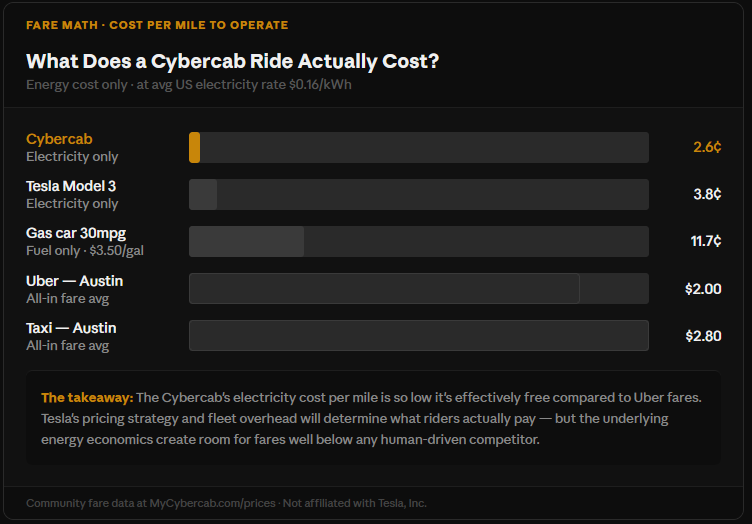
The Cybercab is the most efficient production EV ever certified. The operating economics at 2.6¢/mile are unlike anything in the industry. Whether that translates to cheap rides for passengers depends on Tesla's pricing strategy and how fast they can scale but the underlying numbers are genuinely impressive. Keep tabs on what the community is spotting and what fares are actually looking like on the MyCybercab price tracker. (Coming Soon) That's the real data.