Cybercabs Are Coming Off the Line But Here's the Catch
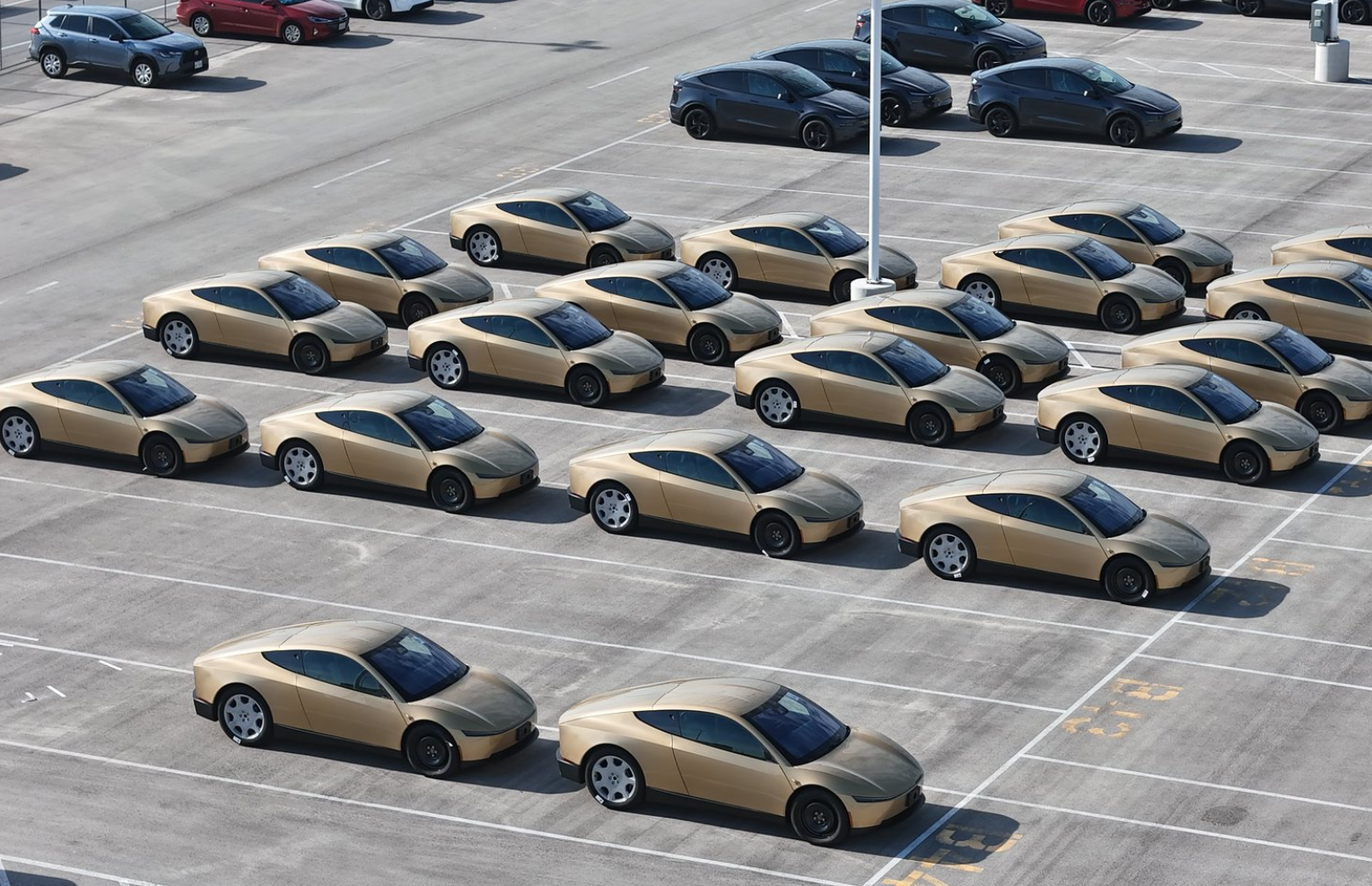
Production of the Tesla Cybercab has officially begun at Giga Texas. A small but growing number are rolling off the line some without steering wheels or pedals, most still with them. Daily output is modest by Tesla standards, maybe a dozen units at peak so far but that already clears Waymo's production ceiling. We've been spotting them on public roads across multiple states, sometimes with a safety driver, sometimes with that tall ground-truth sensor rig bolted to the roof. Meanwhile Tesla's unsupervised Model Y robotaxi fleet keeps quietly expanding in Austin, Dallas, and Houston. Check the live sightings map — the community is logging them in real time.
So Why Can't Anyone Actually Ride One Yet?
Here's the part nobody talks about enough. Not one unsupervised ride has been offered to the public in a purpose-built Cybercab. Not one. The cars exist. They're moving. So what's the hold-up? Three real technical problems — and none of them are small.
Problem 1 The Geofence Can't Keep Up With Production
Unsupervised robotaxi operations are locked to approved geographic zones. Austin's area has grown to roughly 245 square miles solid progress but Dallas and Houston launched with footprints closer to 25 square miles. You can't flood a small approved zone with thousands of new vehicles and expect the system to handle it. Production is already outpacing the operational domain. The cars are ready before the roads are.
Problem 2 No Steering Wheel, No Fallback
The production Cybercab is a pure robotaxi by design no steering wheel, no pedals, no side mirrors. That final configuration went into continuous production in April 2026. It's the right long-term call, but it creates an immediate constraint: the vehicle can only run unsupervised inside zones where FSD has already been validated on other platforms. There's no human override option. It either works perfectly or it doesn't run.
Problem 3 It's a Completely Different Machine
This is the biggest one. Cybercab is not a Model Y with a new body. It's ~13 inches shorter, 12–13 inches narrower, sits lower, has a different wheelbase, different mass distribution, and a re-optimized camera suite with better 360° coverage. The neural network sees the world differently from this vehicle different angles, different occlusions, different motion dynamics. Tesla went through something similar with Cybertruck and it took serious fine-tuning. But Cybertruck had an advantage Cybercab won't: tens of thousands of customer-owned vehicles logging supervised FSD miles daily, with real driver interventions flagging exactly where the model was failing. Cybercab is a pure robotaxi from day one that natural stream of corrective data doesn't exist yet. Cities like Austin and Las Vegas are where this validation work is happening right now.
Meanwhile Tesla Is Playing the Long Game in Public
While the engineering gets sorted, Tesla is running a very deliberate visibility campaign. They set up an Autonomy Pop-Up at Lummus Park in Miami Beach from April 29 through May 3, dropped right inside the F1 Miami Grand Prix Fan Fest. A Cybertruck towed a Cybercab in a glass display case marked "Future is Autonomous" through the beachfront crowd. Two weeks before that, Optimus was stationed on the final stretch of the Boston Marathon free, in public, generating earned media at zero ad cost. The pattern is clear: get the hardware in front of as many eyes as possible before commercial service opens.
The Expansion Plan and the Numbers Behind It
Tesla has confirmed robotaxi expansion to seven cities in the first half of 2026 Dallas, Houston, Phoenix, Miami, Orlando, Tampa, and Las Vegas building on the unsupervised service already running in Austin. Musk expects robotaxis to cover between a quarter and half of the US by end of year. On the production side, he's told shareholders the Cybercab line could eventually hit 5 million vehicles per year — one unit every ten seconds. Scaling to 10 million operational robotaxi units over the next decade is a formal condition of his compensation package. As for price Musk has said under $30,000 to own, with operating costs around $0.20 per mile. Whether those numbers survive full-scale production is still an open question. Las Vegas is already on the confirmed expansion list — add your sighting if you catch one out there. 🚗⚡