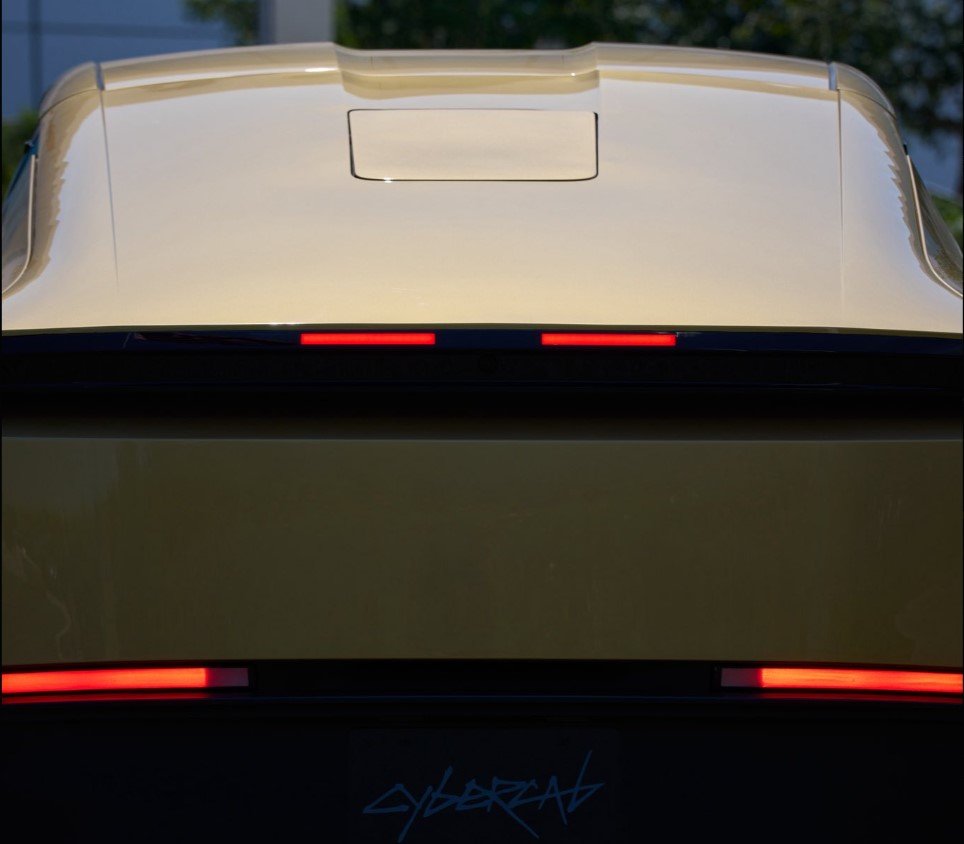
If you've been following the Cybercab rollout, last week gave you two completely separate stories worth paying attention to. The first: the @robotaxi account posted photos of the first Cybercab featuring a flush-mounted Starlink V5 dish gold-covered, built right into the rear liftgate, and genuinely impossible to distinguish from the vehicle's bodywork if you don't know what you're looking at. The second: drone footage from July 18 showed 245 Cybercabs staged in parking lots at Giga Texas a record, and more than double the 102 counted just five weeks earlier. Add those two together and you start to understand exactly where this program is right now: the hardware is dialed in, the production is running, and the fleet is building faster than the deployment map.We've been tracking this community from day one — Our MAP of over 175 Cybercab sightings logged across 75 cities on the MyCybercab.com map. What's happening now is the story we've been watching build for months. Let's break it down.
The Starlink Dish: Why the Gold Cover Actually Matters
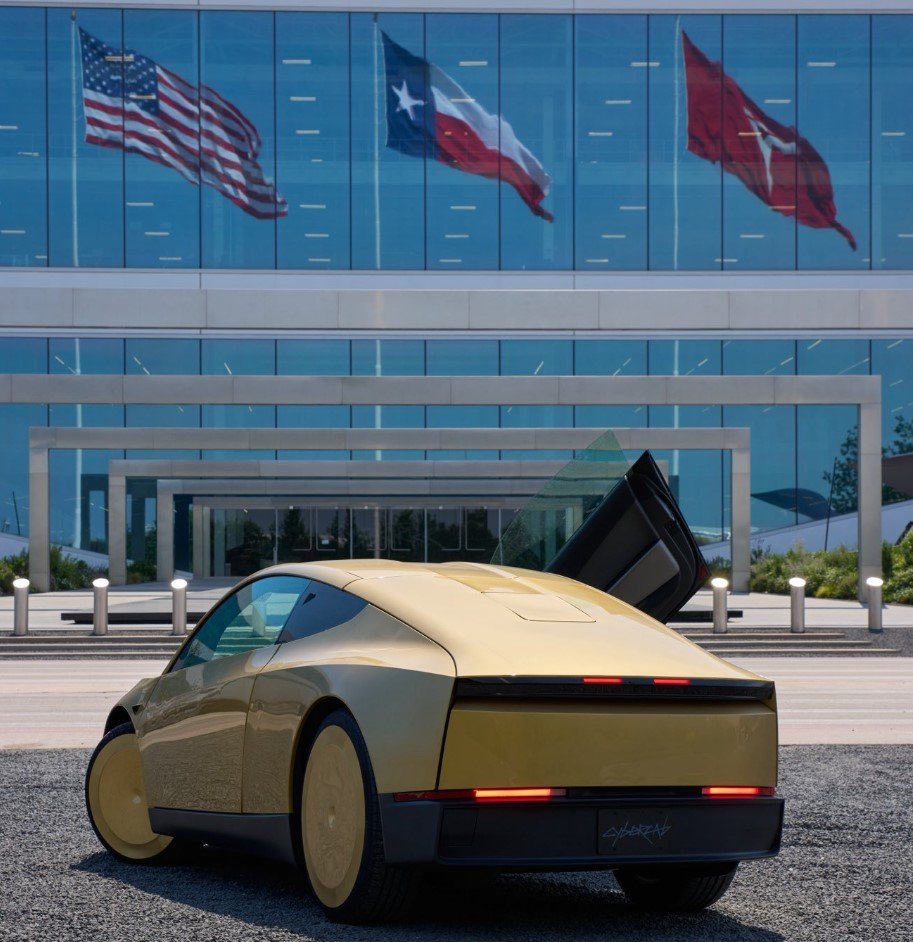
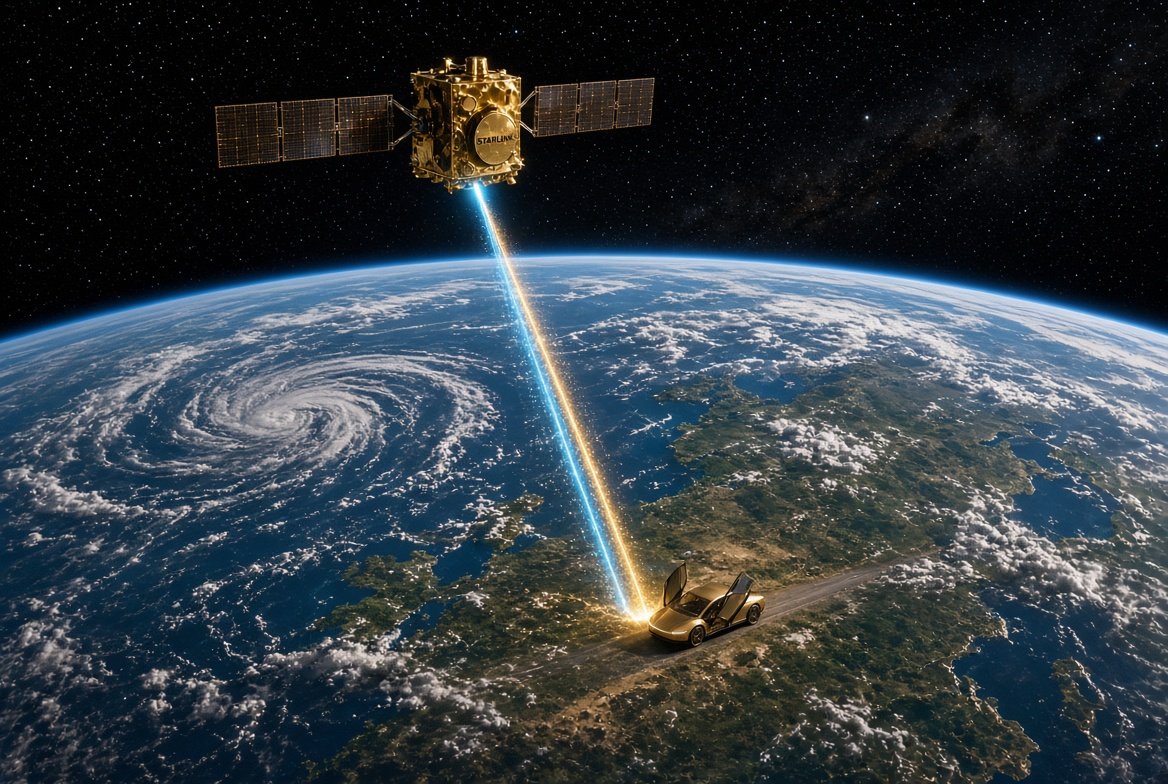
Tesla confirmed on July 20, 2026 that Starlink V5 is "directly integrated in Cybercab" the announcement came through simultaneous posts from Tesla and Starlink, each showing a cutaway diagram of the Cybercab roof with a "Starlink Integration" block labeled alongside the GPS antenna, 5G LTE hardware, FSD computer, and eight external cameras. What made the recent photos different is what it looks like on an actual production vehicle: a compact, gold-covered, aerodynamically flush dish that disappears into the rear of the car. Earlier test cars had Starlink Mini dishes bolted to the exterior functional but clearly temporary. The updated production unit shows a gold cover and flush mounting, making it far more seamlessly integrated into the vehicle's bodywork compared to the more exposed dish hardware seen in prototypes. The V5 terminal delivers download speeds exceeding 375 Mbps more than enough for simultaneous 4K video streams. Compared to the previous V4, the V5 is 35% smaller and 62% lighter at just 1.1 kg, draws roughly half the power (35–50 watts), and is rated for wind resistance up to 265 km/h. That last spec matters for a vehicle running close to 24/7 in all weather conditions across multiple cities.
What Starlink Actually Does in a Robotaxi
 Immediately after the announcement, a lot of people online asked the obvious question: why does a self-driving car need satellite internet? Ashok Elluswamy, Tesla's head of Autopilot, answered it directly: "It is still not required for safe operation of the vehicle. Connectivity is primarily meant for navigation, customer service and, in general, fleet management." The Cybercab already has dual GPS for redundancy and a next-generation FSD computer handling the actual driving. Starlink doesn't drive the car it keeps the operation running.
The Cybercab uses a multi-network architecture that combines terrestrial 5G/LTE with satellite broadband. As autonomous vehicles become more dependent on continuous software updates, fleet telemetry, HD map synchronization, passenger services, and remote assistance, hybrid terrestrial-satellite networking offers greater resilience than relying solely on mobile operators. In other words: the Cybercab uses 5G when it's there which in Austin, Dallas, and Houston it almost always is and Starlink fills in everywhere else. As the fleet expands into smaller cities and suburban corridors, that backup layer becomes increasingly valuable.
Elon Musk has also made it clear there's a passenger-facing benefit: 4K video streaming while the car drives you. With 375 Mbps available through the V5 terminal, you could stream multiple 4K feeds simultaneously in the cabin. The operational pitch is even more important: OTA software updates pushed to hundreds of vehicles simultaneously without depending on local cell towers, telemetry data uploaded faster than cellular alone can handle, and remote operator access to any vehicle in the fleet without a signal gap.
Immediately after the announcement, a lot of people online asked the obvious question: why does a self-driving car need satellite internet? Ashok Elluswamy, Tesla's head of Autopilot, answered it directly: "It is still not required for safe operation of the vehicle. Connectivity is primarily meant for navigation, customer service and, in general, fleet management." The Cybercab already has dual GPS for redundancy and a next-generation FSD computer handling the actual driving. Starlink doesn't drive the car it keeps the operation running.
The Cybercab uses a multi-network architecture that combines terrestrial 5G/LTE with satellite broadband. As autonomous vehicles become more dependent on continuous software updates, fleet telemetry, HD map synchronization, passenger services, and remote assistance, hybrid terrestrial-satellite networking offers greater resilience than relying solely on mobile operators. In other words: the Cybercab uses 5G when it's there which in Austin, Dallas, and Houston it almost always is and Starlink fills in everywhere else. As the fleet expands into smaller cities and suburban corridors, that backup layer becomes increasingly valuable.
Elon Musk has also made it clear there's a passenger-facing benefit: 4K video streaming while the car drives you. With 375 Mbps available through the V5 terminal, you could stream multiple 4K feeds simultaneously in the cabin. The operational pitch is even more important: OTA software updates pushed to hundreds of vehicles simultaneously without depending on local cell towers, telemetry data uploaded faster than cellular alone can handle, and remote operator access to any vehicle in the fleet without a signal gap.200+ Cybercabs in One Parking Lot. Where Are They Going?
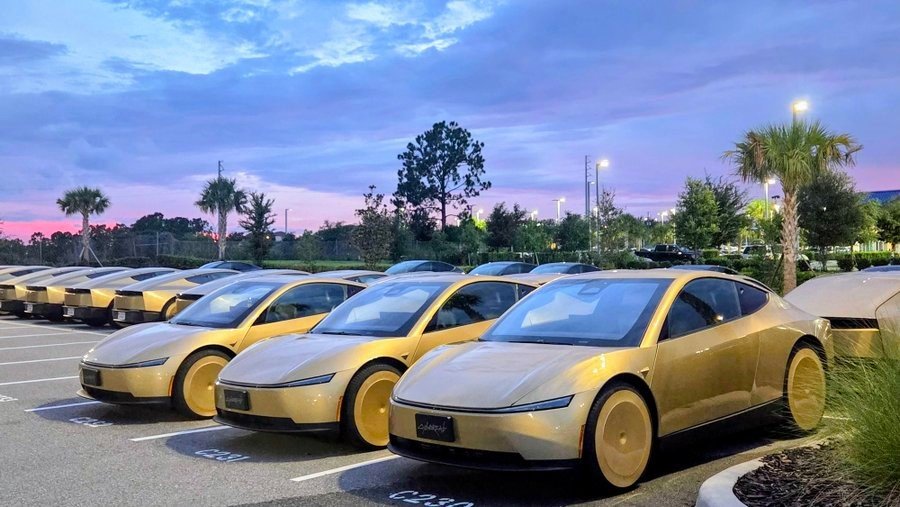
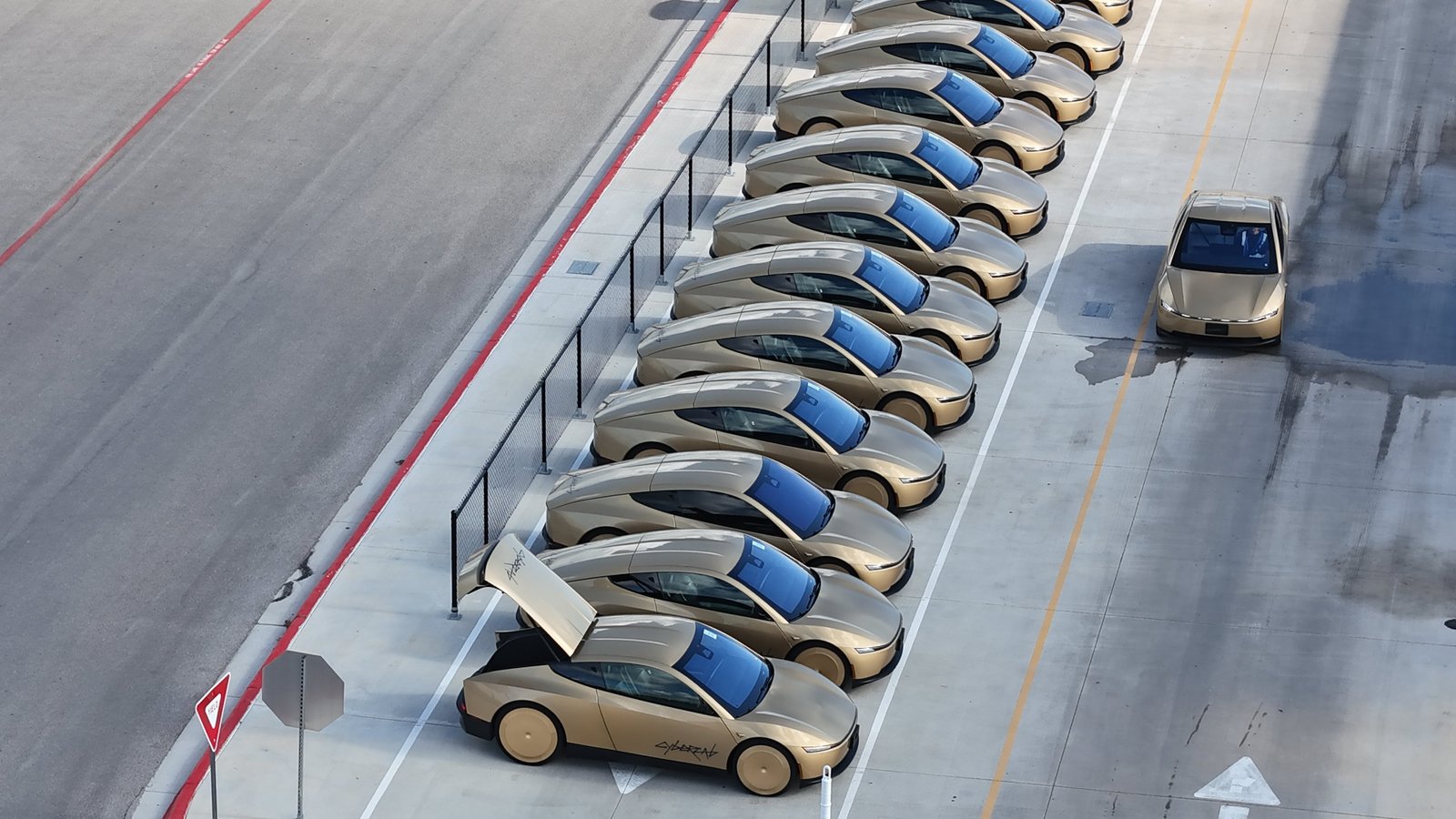 A drone flyover of Gigafactory Texas on July 18, 2026 by JoeTegtmeyer captured 245 Tesla Cybercab units staged across the Austin factory's lots a new record, more than double the 102 counted just five weeks earlier. The gold two-seaters sat in tight rows across multiple staging areas, some in the familiar outbound lot, others spread across a second parking field on the campus. That number went from 60 in April to 102 in June to 245 in July. The production line is sprinting.
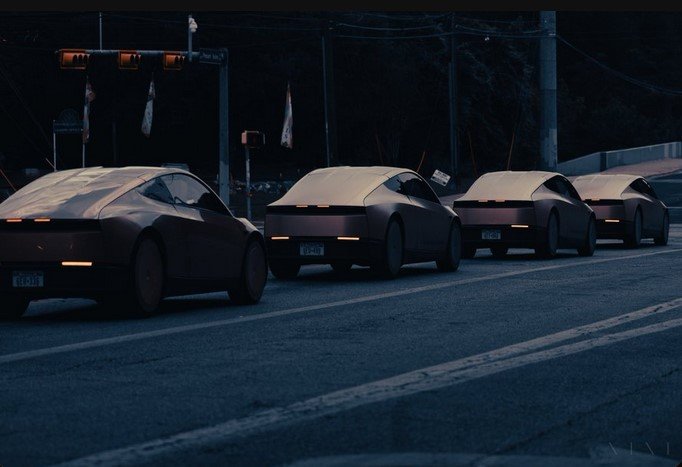
The community has been watching this build in real time. We've logged over 158 sightings across 68 cities and the numbers keep climbing. But here's the tension that matters: these cars cannot earn a fare until unsupervised FSD clears Tesla's own validation bar in a vehicle with no fallback controls at all. The hardware is ready. The software is what's being validated right now through employee rides, test drives on Austin public roads, and the expanding Robotaxi service running on modified Model Ys in Austin, Dallas, Houston, Miami, Orlando, Tampa, Las Vegas, and Phoenix.
The first sign of where the lot is draining: Cybercabs have now been documented in Charlotte, North Carolina a multi-car batch staged outside Texas for what appears to be service preparation. Charlotte is shaping up as a head-to-head market between Tesla and Waymo, as Alphabet's robotaxi unit has been testing and mapping the city for months while Tesla now has vehicles on the ground. Charlotte wasn't on Tesla's official Q2 earnings slide. Charlotte is where the logistics went anyway. When Tesla's press releases and Tesla's logistics disagree, the cars in the parking lot usually have the better information.
A drone flyover of Gigafactory Texas on July 18, 2026 by JoeTegtmeyer captured 245 Tesla Cybercab units staged across the Austin factory's lots a new record, more than double the 102 counted just five weeks earlier. The gold two-seaters sat in tight rows across multiple staging areas, some in the familiar outbound lot, others spread across a second parking field on the campus. That number went from 60 in April to 102 in June to 245 in July. The production line is sprinting.
The community has been watching this build in real time. We've logged over 158 sightings across 68 cities and the numbers keep climbing. But here's the tension that matters: these cars cannot earn a fare until unsupervised FSD clears Tesla's own validation bar in a vehicle with no fallback controls at all. The hardware is ready. The software is what's being validated right now through employee rides, test drives on Austin public roads, and the expanding Robotaxi service running on modified Model Ys in Austin, Dallas, Houston, Miami, Orlando, Tampa, Las Vegas, and Phoenix.
The first sign of where the lot is draining: Cybercabs have now been documented in Charlotte, North Carolina a multi-car batch staged outside Texas for what appears to be service preparation. Charlotte is shaping up as a head-to-head market between Tesla and Waymo, as Alphabet's robotaxi unit has been testing and mapping the city for months while Tesla now has vehicles on the ground. Charlotte wasn't on Tesla's official Q2 earnings slide. Charlotte is where the logistics went anyway. When Tesla's press releases and Tesla's logistics disagree, the cars in the parking lot usually have the better information.The Regulatory Piece Nobody's Talking About
Here's a detail that matters for the scale question. Tesla VP of Vehicle Engineering Lars Moravy confirmed on X that the Cybercab will not be subject to NHTSA's 2,500-unit annual production cap. His answer when asked whether the cap applied: a single word — "No." NHTSA has proposed amending FMVSS Standard No. 135 to remove the manual brake control requirement for vehicles designed exclusively for Automated Driving System operation. If that rule finalizes, Tesla can produce as many Cybercabs as it wants without needing an exemption negotiation for every batch. Two million per year was Tesla's stated target when multiple factories are at capacity. The cap isn't the ceiling. The software is.
The Tesla Semi Connection How Cybercabs Get Everywhere
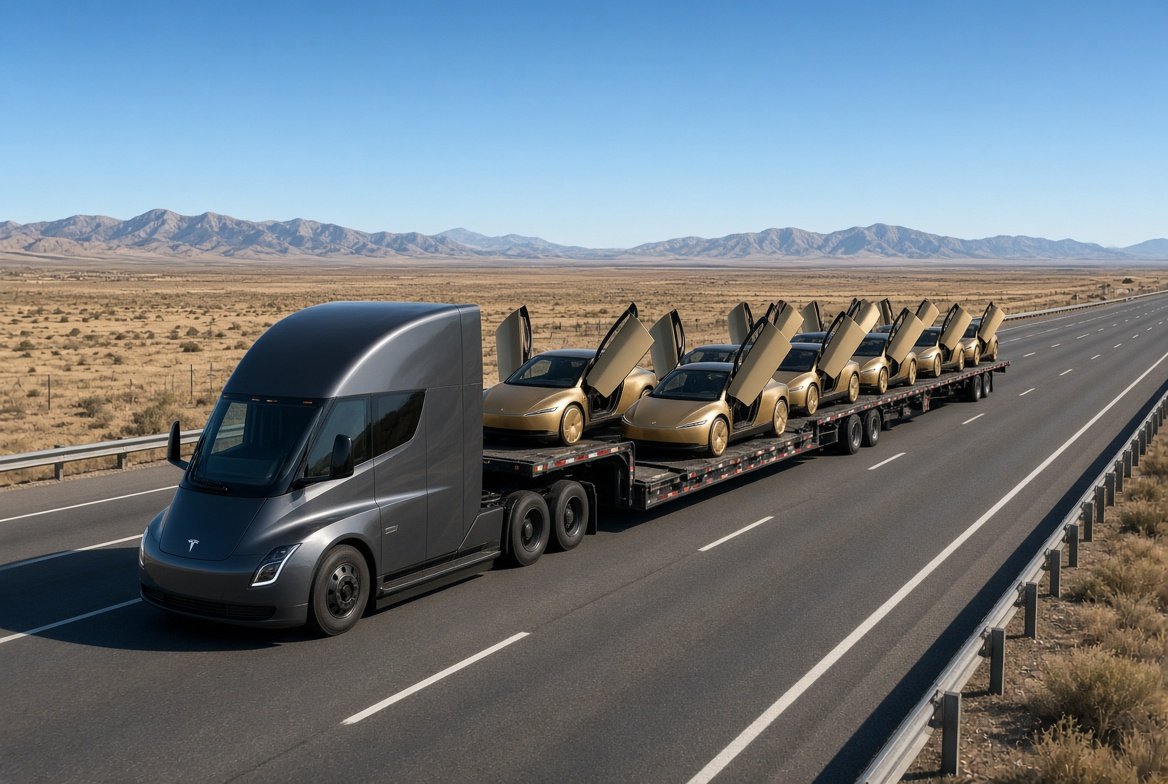
Here's a detail that ties two Tesla programs together in a way most people haven't written about. Getting 245 Cybercabs from a parking lot in Austin to deployment cities across the country isn't a logistics footnote — it's a meaningful supply chain operation. And the vehicle doing it is the Tesla Semi. The math is straightforward: the Cybercab has a curb weight of 3,113 lbs. The Tesla Semi Standard Range has roughly 48,000 lbs of payload capacity on a standard flatbed. That means a single Tesla Semi run can haul approximately 14–15 Cybercabs in one trip. So the 245 cars staged at Giga Texas? That's roughly 17 Semi loads to clear the lot — all-electric, all autonomous vehicle, one Tesla program delivering the other. , For the full Tesla Semi SPECS It's worth noting that the Semi's connectivity stack also benefits from Starlink high-bandwidth fleet telemetry and OTA updates for long-haul electric trucks face the same cellular dead-zone problem that Cybercab does. Tesla is essentially building a fully-connected electric transportation ecosystem where both the robotaxi and the truck moving it run on the same satellite backbone.
Where the Cybercab Program Actually Stands Right Now
Here's the honest picture. Tesla launched Cybercab robotaxi service in Orlando and Tampa in late July, bringing its active city count to eight. That expansion is real and it's fast. But the current unsupervised Robotaxi service is primarily running on modified Model Ys the purpose-built Cybercab is still in the employee trial and validation phase. The Full Cybercab SPECS confirmed by EPA filing are genuinely impressive: 3,113 lbs, 219 hp, ~48 kWh battery, 418-mile lab range, ~165 Wh/mi efficiency the most efficient production EV ever built. A production Cybercab (no steering wheel, no pedals) is now on display at a reopened Tesla showroom in San Jose, California, sitting next to the Starlink integration diagram. The hardware is production-intent. The regulatory path is advancing. The software is catching up. And based on what this community has been tracking Our Map,the deployment is already broader than the official announcements suggest.
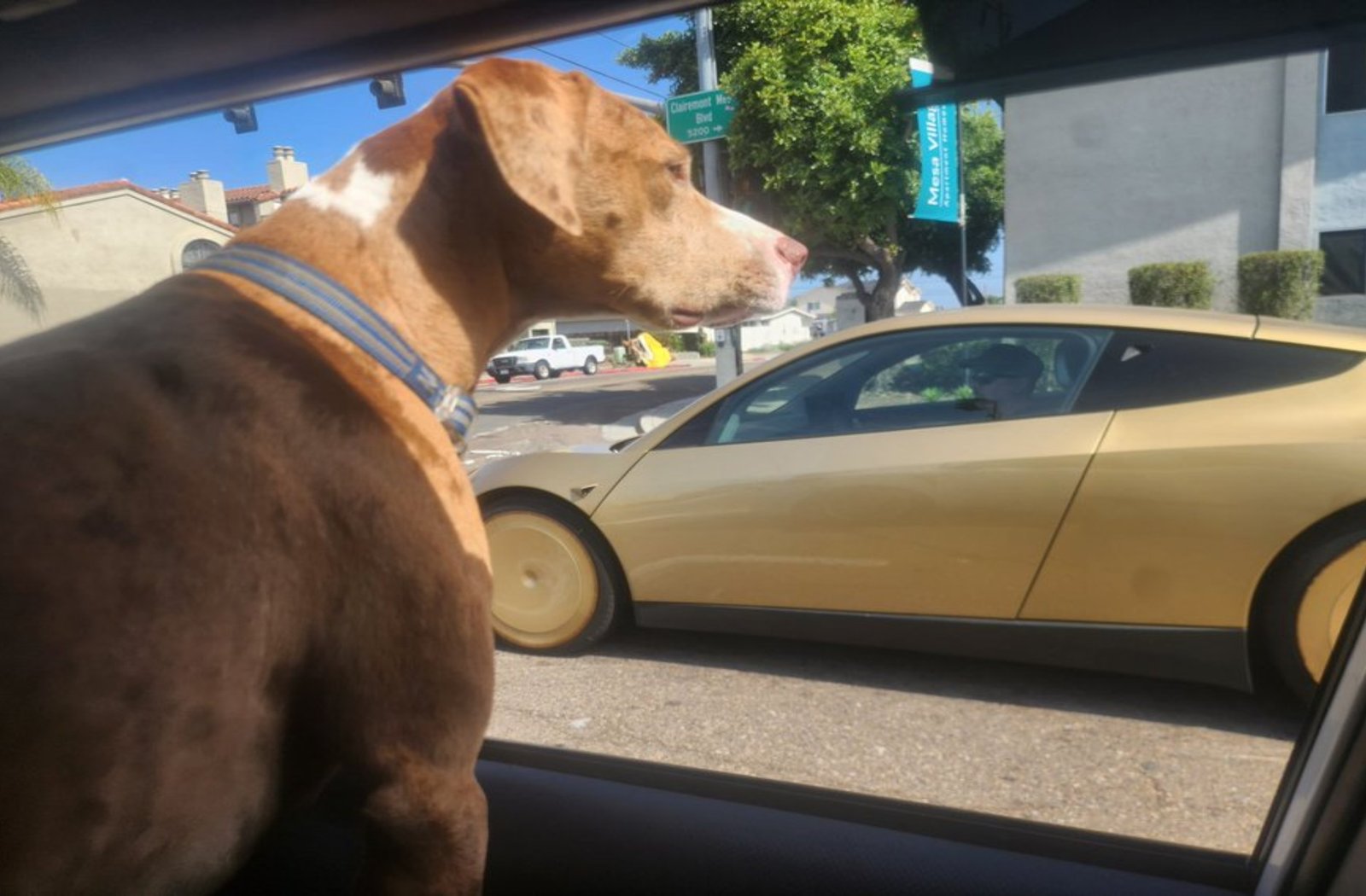
Cheers, MrJavierJose on X Cheers and props to @ScottSpillers on for the amazing Sighting Also Cheers and Props to @HanselRivera171 on X for his amazing inside look of the CAB And of course Magic Mat's DOG picture